Root Canal Treatment: What Actually Happens, Step by Step
Carewell Dental Clinic · Updated: 24 April 2026 · 7 min read
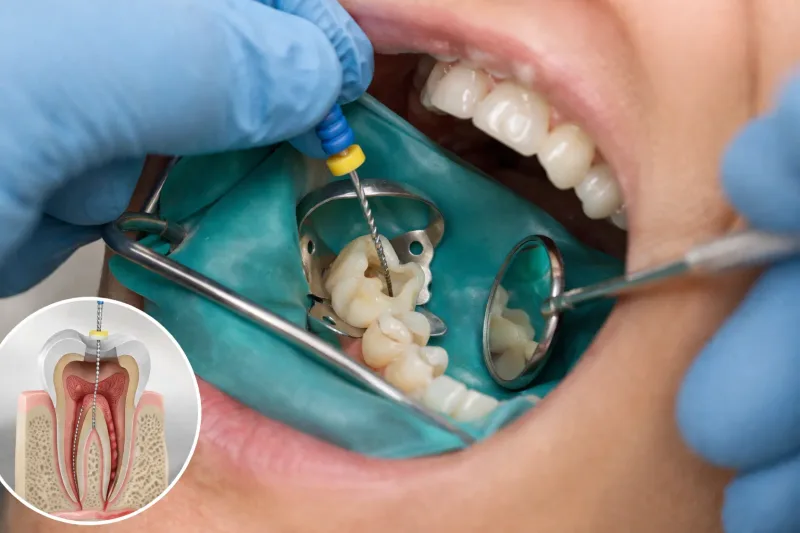
Root canal treatment has a reputation that is far worse than the procedure itself. Most of that fear comes from not knowing what actually happens inside the chair. The reality: a well-performed root canal is no more uncomfortable than a standard filling, and it saves a tooth that would otherwise need extraction.
This guide walks through every stage of the procedure so you know exactly what to expect before, during, and after.
Why a Root Canal Becomes Necessary
Each tooth contains a soft tissue called pulp — a bundle of nerves and blood vessels that runs through the root canals. When decay, a crack, or repeated dental trauma allows bacteria to reach the pulp, it becomes infected. The infection causes pain, swelling, and eventually spreads to the surrounding bone if left untreated.
A root canal removes the infected pulp, cleans and seals the canals, and preserves the outer tooth structure. The alternative is extraction, which then requires an implant, bridge, or denture to restore function. Saving the natural tooth is almost always the better outcome.
The Step-by-Step Procedure
The dentist takes a periapical X-ray to map the root canal anatomy, count the canals, and assess bone changes around the root tip. This guides the entire procedure.
A local anaesthetic is injected around the tooth and surrounding gum. You will feel pressure during the procedure but not pain. Most patients are surprised by how comfortable this stage is.
A thin rubber sheet (dental dam) is placed around the tooth to keep it dry and free from saliva. This protects the canals from contamination during cleaning.
A small opening is made through the crown of the tooth to reach the pulp chamber. For back teeth this is through the chewing surface; for front teeth through the back surface.
Tiny flexible files remove the infected pulp and widen each canal to a smooth, tapered shape. The canals are irrigated repeatedly with an antibacterial solution throughout this stage.
The cleaned canals are filled with a biocompatible rubber-like material called gutta-percha and sealed with dental cement. This prevents bacteria from re-entering the canals.
How Many Appointments Does It Take?
Most straightforward root canals at Carewell Dental are completed in one to two visits. Simple single-rooted teeth (front teeth, lower premolars) are often finished in a single appointment of 60–90 minutes. Multi-rooted back teeth, or cases with significant infection, may require a second visit after a few days to allow any residual infection to settle before the final seal is placed.
Does It Hurt?
The procedure itself should not hurt because the area is fully numb. Some patients feel soreness in the jaw from keeping the mouth open, and mild sensitivity around the tooth for 2–3 days afterwards — this is normal and manageable with over-the-counter pain relief. Persistent or worsening pain after 48 hours is uncommon; if it occurs, contact the clinic promptly.
What Happens After: The Crown
A root-treated tooth loses moisture over time and becomes more brittle. For any back tooth that bears heavy chewing forces, a dental crown is strongly recommended after root canal treatment. The crown protects the tooth from cracking and extends its lifespan significantly — teeth with crowns after root canal treatment routinely last 10–15 years or more.
Front teeth that have been root-treated but are otherwise structurally sound may only require a composite filling to close the access opening, with regular monitoring.
What Root Canal Treatment Costs in Malaysia
Cost depends on which tooth is being treated and how many canals it has. Single-rooted front teeth have fewer canals and take less time; upper molars commonly have three or four canals and cost more. Panel insurance (AIA, HealthMetrics, MediLink-Global and others) typically covers root canal treatment — check your benefit schedule for the annual limit that applies.
At Carewell Dental, root canal fees include the full cleaning and obturation. The crown, if needed, is quoted separately at the same visit so you can plan ahead.
Can the Infection Come Back?
A well-sealed root canal rarely re-infects. Failure usually happens when the tooth cracks after treatment (hence the importance of a crown on back teeth), when a canal was missed during cleaning, or when the restoration leaks over many years. If a previously treated tooth becomes symptomatic again, re-treatment or a surgical procedure called an apicoectomy may be possible before extraction is considered.
Tooth pain in Sentul, Jalan Ipoh?
Our team can assess whether root canal treatment, a filling, or another option is right for you — often in the same appointment as the diagnosis.