Why dental X-rays matter
A clinical examination is an essential first step, but it cannot see everything. Cavities forming between teeth, bone levels around roots, cysts, impacted teeth, and root infections are all invisible without radiographic imaging. Digital dental X-rays make the invisible visible — guiding accurate diagnosis and treatment planning.
At Carewell Dental we use modern digital X-ray sensors that reduce radiation exposure by up to 80% compared to traditional film X-rays. Images appear on screen within seconds, allowing your dentist to review findings with you in real time during your appointment.
What each X-ray shows
Bitewing X-rays
Show crowns of upper and lower teeth and bone between them. Used to detect interproximal cavities, monitor existing fillings, and assess crestal bone levels. Typically taken annually.
Periapical X-rays
Show the entire tooth from crown to root tip and surrounding bone. Used to diagnose root infections, abscesses, bone loss around specific teeth, and root fractures.
OPG (Panoramic)
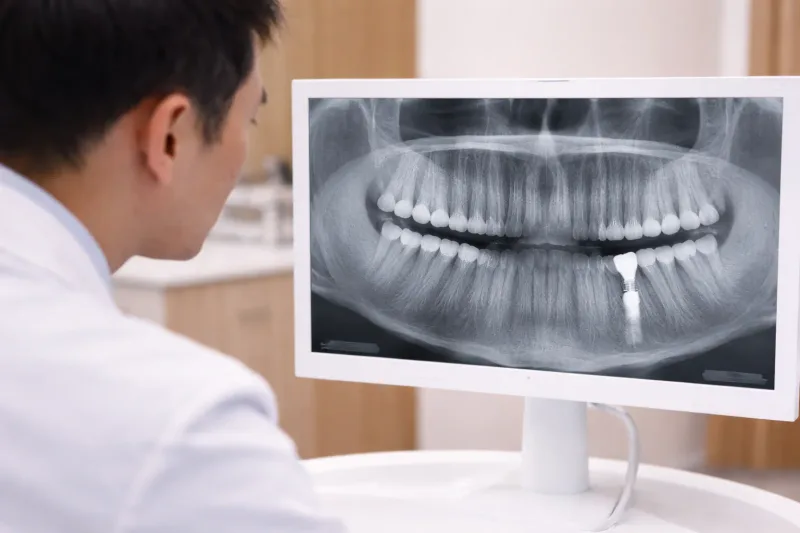
A single wide-view image showing all teeth, jaw joints, sinuses, and nerve canals. Essential for wisdom tooth assessment, orthodontic planning, and implant evaluation.
Intraoral X-rays
Small sensors placed inside the mouth capture highly detailed images of individual teeth — ideal for root canal treatment, post-treatment review, and evaluating specific areas of concern.
Common questions about dental X-rays
Are dental X-rays safe? add
Digital dental X-rays use up to 80% less radiation than traditional film X-rays. The dose from a routine set of bitewing X-rays is comparable to a few hours of background radiation from everyday life — far less than a short flight. A lead apron is always used as standard practice.
How often do I need dental X-rays? add
For most adults with no active issues, bitewing X-rays are taken once a year and a panoramic (OPG) every 3–5 years. Frequency is adjusted based on cavity risk, gum disease history, and current treatment needs. Your dentist recommends only what is clinically necessary.
Can I have an X-ray if I am pregnant? add
Routine X-rays are generally deferred during pregnancy, especially in the first trimester. If an X-ray is clinically necessary, a lead apron and thyroid collar minimise exposure. Always inform your dentist if you are pregnant or might be.
What is the difference between a bitewing and an OPG? add
Bitewing X-rays show the crowns and upper roots of back teeth — ideal for detecting cavities and monitoring bone between teeth. An OPG (panoramic) shows the entire dentition, jaw joints, and surrounding anatomy in one image — used for treatment planning and wisdom tooth assessment.