What are metal braces?
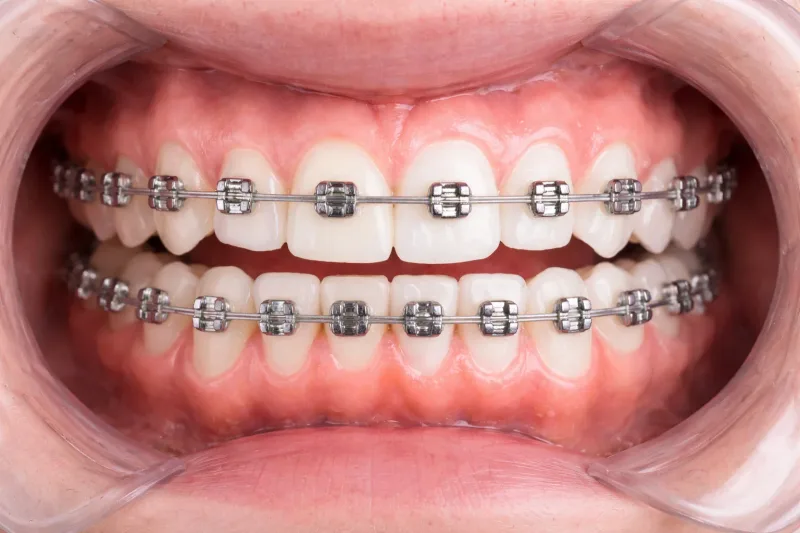
Metal braces consist of small stainless-steel brackets bonded to the front surface of each tooth, connected by a thin archwire held in place with small elastic ties. The orthodontist adjusts the wire tension at each monthly visit, applying gentle, continuous force to guide teeth into correct alignment over time.
Despite the rise of clear aligner options, metal braces remain the most versatile orthodontic tool available. They are capable of correcting complex bite problems, severe crowding, and rotations that aligners may struggle to achieve with the same level of precision or efficiency.
At Carewell Dental in Sentul, Jalan Ipoh, our team assesses your individual case and recommends the most suitable orthodontic approach — whether that is metal braces, ceramic braces, or clear aligners. Treatment is monitored throughout with regular check-ins to ensure progress stays on track.
How metal braces treatment works
Orthodontic Assessment
We take full-mouth X-rays, photographs, and dental impressions to assess your bite, tooth positions, and jaw relationship. A detailed treatment plan and duration estimate is prepared.
Bracket Placement
The tooth surfaces are cleaned and the metal brackets are bonded using dental adhesive. The archwire is threaded through and secured. This appointment typically takes 60–90 minutes.
Monthly Adjustments
Every 4–6 weeks, you return for a wire change or tightening. These short visits keep treatment progressing. We monitor tooth movement and make adjustments to the treatment plan as needed.
Debond & Retainer
Once treatment goals are achieved, the brackets are removed and your teeth are polished. A custom retainer is fitted the same day to preserve your new smile permanently.
Benefits of metal braces
Handles Complex Cases
Severe crowding, rotations, and bite corrections that challenge clear aligners are routinely managed with metal braces.
Most Affordable Option
Metal braces are typically the lowest-cost orthodontic solution, making a straight smile accessible to more patients.
Reliable & Predictable
Decades of clinical history behind them. Tooth movement is consistent because the appliance is fixed and cannot be removed by the patient.
No Compliance Needed
Because braces are fixed, treatment progresses continuously — there is no risk of under-wearing like with removable aligners.
Suitable for All Ages
Teens and adults both benefit. Younger patients often achieve faster results as jawbone is still developing.
Lasting Results
With proper retainer use after treatment, results from metal braces can last a lifetime.
Braces vs Clear Aligners
Both are effective orthodontic options. The right choice depends on the complexity of your case, your lifestyle, and your budget. Use this table as a starting point — your dentist will recommend the best fit after an assessment.
Common questions about metal braces
How long does treatment take? add
Most metal braces treatments take between 12 and 24 months depending on the severity of misalignment. Simpler cases with mild crowding may finish closer to 12 months, while complex bite corrections can take up to 24 months or more. Your orthodontic assessment will give you a personalised duration estimate.
Does it hurt? add
Mild soreness for 2–4 days after fitting and after each adjustment is normal as your teeth adapt to pressure. Over-the-counter pain relief and soft foods during these periods are usually sufficient. Discomfort reduces significantly as treatment progresses and you become accustomed to the appliance.
What foods should I avoid? add
Avoid hard foods (nuts, raw carrots, hard sweets, ice), sticky foods (chewing gum, toffee, caramel), and items you bite into directly (whole apples, corn on the cob). These can bend or break wires and dislodge brackets, causing delays. Cut harder foods into small pieces and chew with your back teeth.
How do I clean my teeth with braces? add
Brush after every meal using a soft toothbrush angled at 45 degrees to the brackets. Use interdental brushes or floss threaders to clean between teeth and under the archwire. Fluoride mouthwash provides additional protection. Thorough cleaning takes 3–4 minutes and is essential to prevent white spot lesions around brackets.
What happens after braces are removed? add
After removal the teeth are polished and a custom retainer is fitted — either a removable plate or a fixed wire bonded behind the front teeth. Retainers hold teeth in their corrected positions while the bone stabilises. Long-term retainer wear is essential to maintain your results permanently.
Braces Care Guide: How to Keep Your Teeth Clean
Step-by-step brushing, flossing, and eating tips to protect your teeth and keep treatment on schedule.
Read Article arrow_forward